THE SHORT VERSION
Yes, you can prepare drinking cacao without a blender. For cacao paste, use your maker's quantities, break up any block as directed, and mix with warm liquid using a hand whisk. Starting with a little liquid before adding the rest is a useful option. Cocoa powder, whole beans, and nibs are not interchangeable with paste.
Check what is in your bag.
This method is for cacao sold for making a drink, particularly cacao paste in a block, chopped pieces, or granulated form. Start with its own instructions. If you have cocoa powder, use a powder-specific recipe; if you have beans or nibs, do not treat them as ready-to-mix paste.
The no-blender option is not just a workaround: Cacao Laboratory lists hand whisks among its preparation tools, and Keith's Cacao describes whisking by hand. Those instructions support the method for their products; they do not establish an identical result for every blend.
A small setup is enough.
- Cacao and liquid measured using the directions for your chosen product.
- A hand whisk and a heat-safe mixing jug or mug with room above the liquid.
- A kettle or pan to heat the liquid.
- A scale; a knife and cutting board if the product is in a block.
A frother is optional, not a required purchase. If you already own one, check its instructions for hot liquids and vessel capacity. Keep the vessel stable, avoid splashing, and do not improvise by shaking hot liquid in a sealed jar.
Build the cup in four steps.
Use this sequence with your product's recommended quantities. The staged-liquid approach also appears in Cocoa Runners' drinking-chocolate instructions (PDF); we are adapting the workflow, not claiming to have tested a new recipe.
- Measure and prepare. Set aside the cacao and total liquid. Chop or grate a block as its maker directs, rather than dropping a large piece into the mug.
- Warm the liquid. Follow your product's directions. The cited staged-mixing guides use warm or hot, not boiling, liquid. Use a thermometer if you need a temperature reading; do not test hot liquid with your finger.
- Start small. In the heat-safe vessel, stir a small part of the measured liquid into the prepared cacao to make a paste. Work through visible lumps before diluting it.
- Finish with the whisk. Add the remaining warm liquid gradually and whisk to combine. Taste when comfortably cooled, then decide whether you want more liquid or an optional addition.
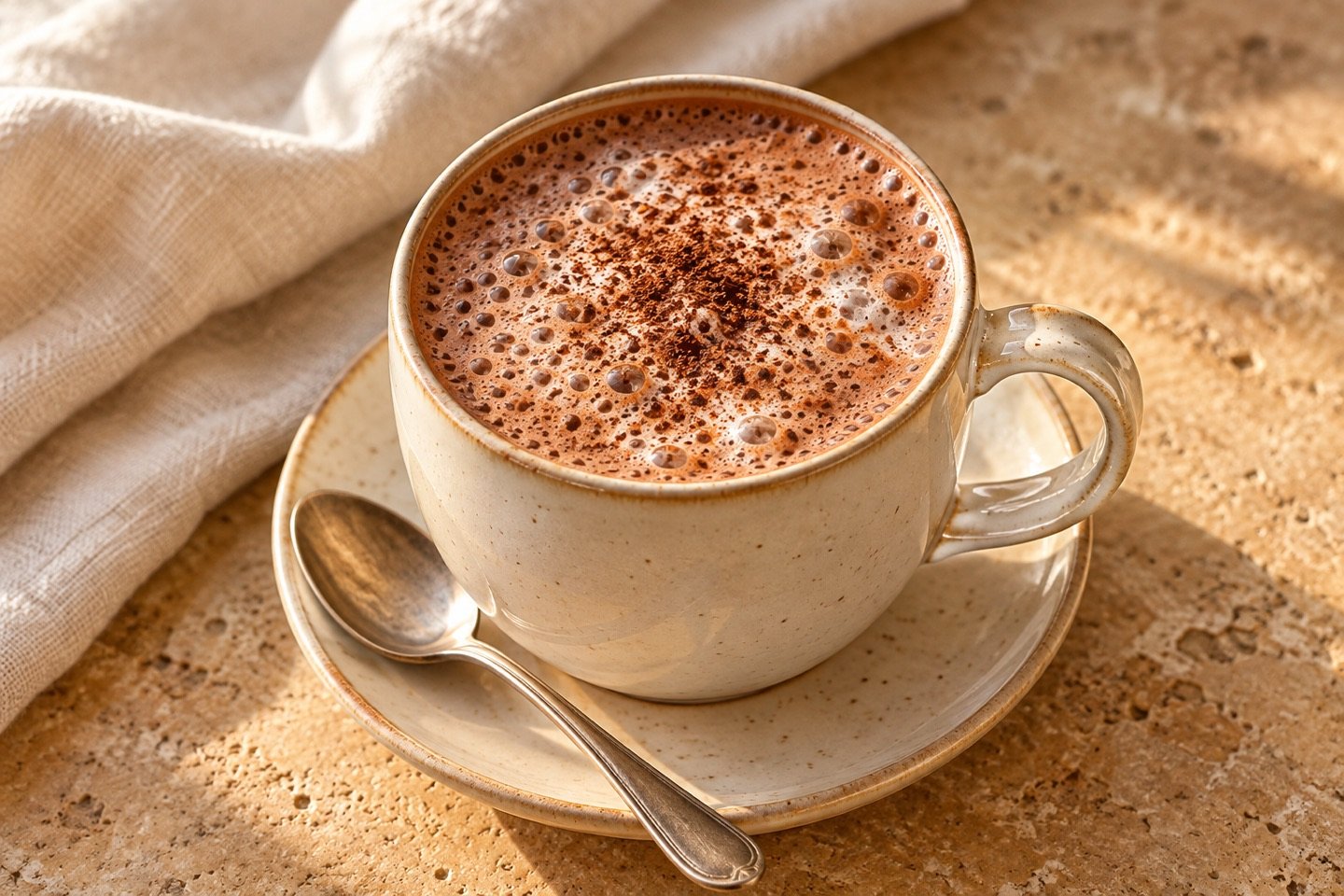
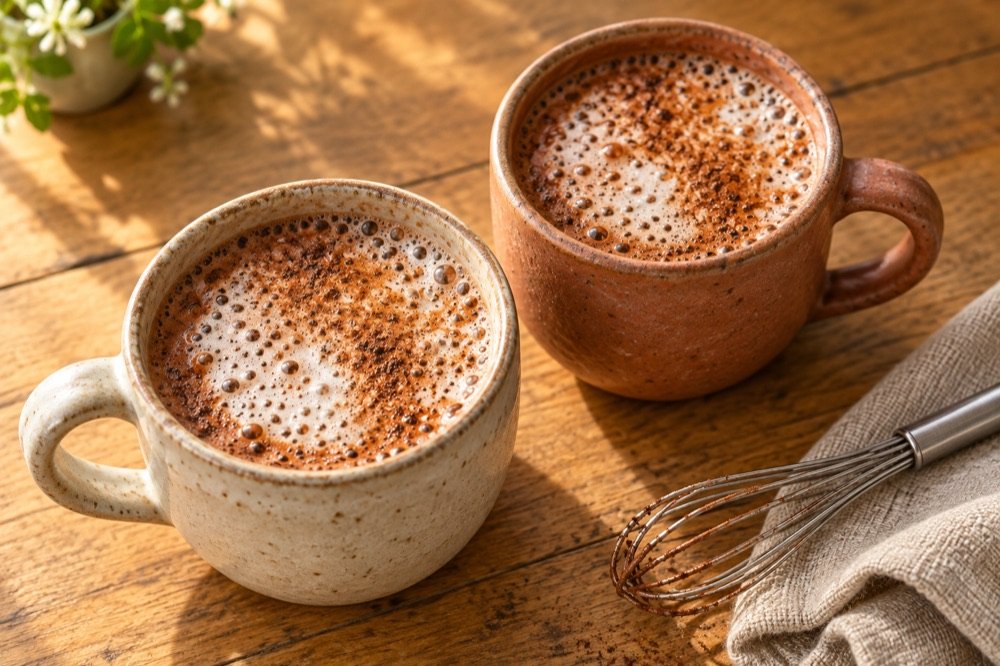
Do not judge success by the height of the foam in a photograph. The useful result is a drink you enjoy and a method you can repeat.
Use a specific recipe, not a universal dose.
For a concrete reference, Keith's foundational recipe pairs 28 g of its own cacao with 200 ml of warm-to-hot water and includes a hand-whisk option. That is a maker's culinary recipe for a named product, not our intake recommendation or a tested Kokoleka formula.
If you are using Kokoleka, follow the current bag or ask the maker for the liquid quantity and hand-whisk method for your blend. Do not transfer another maker's gram amount automatically. Measurements are more useful than instructions such as "a big spoonful" when you want to repeat your result.
Troubleshoot one thing at a time.
These are practical checks to try, not diagnoses or guaranteed fixes. Note the product and quantities before making a change.
| What you notice | Your next check |
|---|---|
| Visible pieces remain | Was a block prepared as directed? Try the small-liquid stage before adding the rest. |
| The drink feels too concentrated | Add a little warm liquid, taste after cooling, and note the new total. |
| Not much foam | Separate foam from whether you enjoy the drink. You do not need to buy a machine to make the photograph your target. |
| An added flavor dominates | Check whether the spice or botanical is already in the blend. Next time, leave extra flavorings out or choose plain cacao. |
| A different texture each time | Record cacao weight, liquid volume, product, and tool; change only one on the next attempt. |
Keep a note worth repeating.
Use one line: product / cacao grams / liquid and milliliters / tool / additions / what to change. You do not need a complicated ritual log. A useful note might simply say "next time, more liquid and no extra spice."
Still choosing what to put in the cup? Explore plain, spiced, and floral cacao. Our finder explains the differences and includes options from more than one maker.
WHAT THIS GUIDE IS BASED ON
Sources & context.
Research-based preparation guidance and an original troubleshooting checklist. The cited sellers support specific methods for their products. BuyCacao has not performed a kitchen test or compared whisking tools. Source links are provided for preparation details, not as endorsements of unrelated health claims on those sites.
- Cacao Laboratory · Preparing your cacao ↗
- Keith's Cacao: Getting Started with Ceremonial Cacao ↗
- Cocoa Runners: drinking-chocolate instructions (PDF) ↗
Pages consulted September 24, 2026; retrieved or cached pages are not a guarantee that a seller's current listing is unchanged. Verify details before ordering.
Editorial responsibility.
Editorial responsibility: BuyCacao. Prepared with AI assistance. This is sourced editorial guidance, not a firsthand product test. Questions or corrections: hello@buycacao.com.